
Defending the Defenders: From Evidence to Policy Uptake
Across Africa, women on the frontlines of environmental and land rights protection face escalating threats. Yet, their experiences have historically been underrepresented in policy, investment, and climate governance frameworks.
In 2025, Natural Justice published a continent-wide body of work examining the situation of women environmental and human rights defenders (WEHRDs) across more than eight African countries. The research combined threat and legal analysis with case-based evidence from at least five countries and targeted gender analysis to clarify how risks are experienced, and why they are often overlooked.
The findings point to a structural issue.
While legal protections for environmental defenders exist in many countries, implementation remains uneven. For women, risk is shaped by gender-specific dynamics—from targeted intimidation to exclusion from decision-making—that are largely invisible in reporting and poorly reflected in policy.
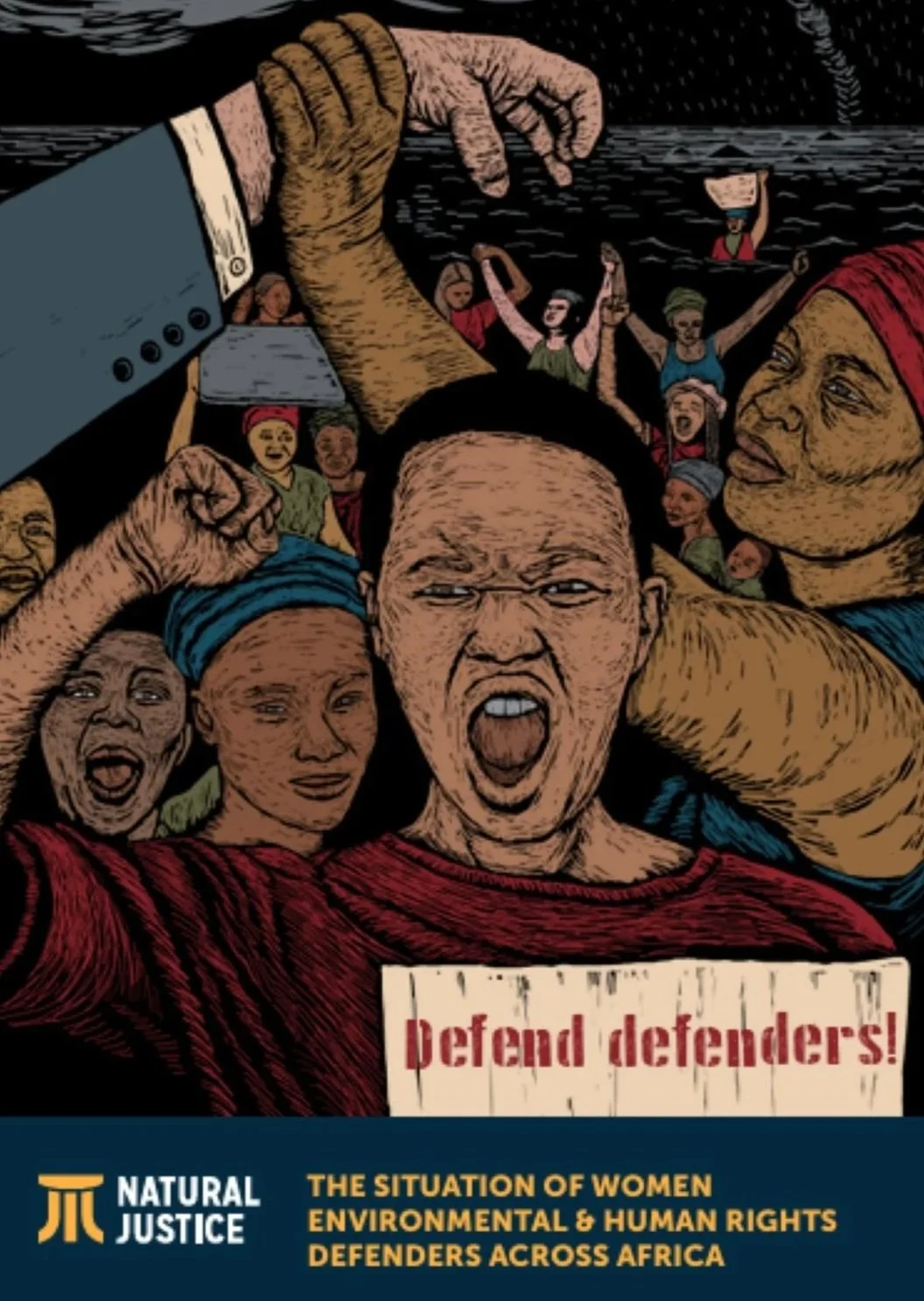
What distinguishes this work is the link between evidence and action.
I co-developed the research methodology and co-led the evidence collection, as well as the qualitative and quantitative analysis underpinning the reports. This included synthesizing insights across multiple data sources, including at least four incident-reporting datasets tracking threats and killings of environmental defenders, and triangulating these with legal and qualitative evidence to build a robust, policy-relevant evidence base.
That evidence was then translated by Natural Justice into advocacy-ready outputs, including a full report, executive summary, and targeted policy briefs, which were deployed across national, regional, and international processes. This included engagement around the COP30 and contributions linked to the International Union for Conservation of Nature (IUCN) World Conservation Congress, where the analysis helped strengthen calls for more effective institutional responses to the protection of environmental defenders.
The result is not just a set of publications, but a foundation for action: a clear, evidence-based articulation of the risks facing women environmental defenders, and a practical basis for integrating gender-responsive approaches into climate, biodiversity, and human rights agendas.
As these agendas accelerate, the question is less about recognition—and more about whether institutions are equipped to respond to what the evidence now makes visible.